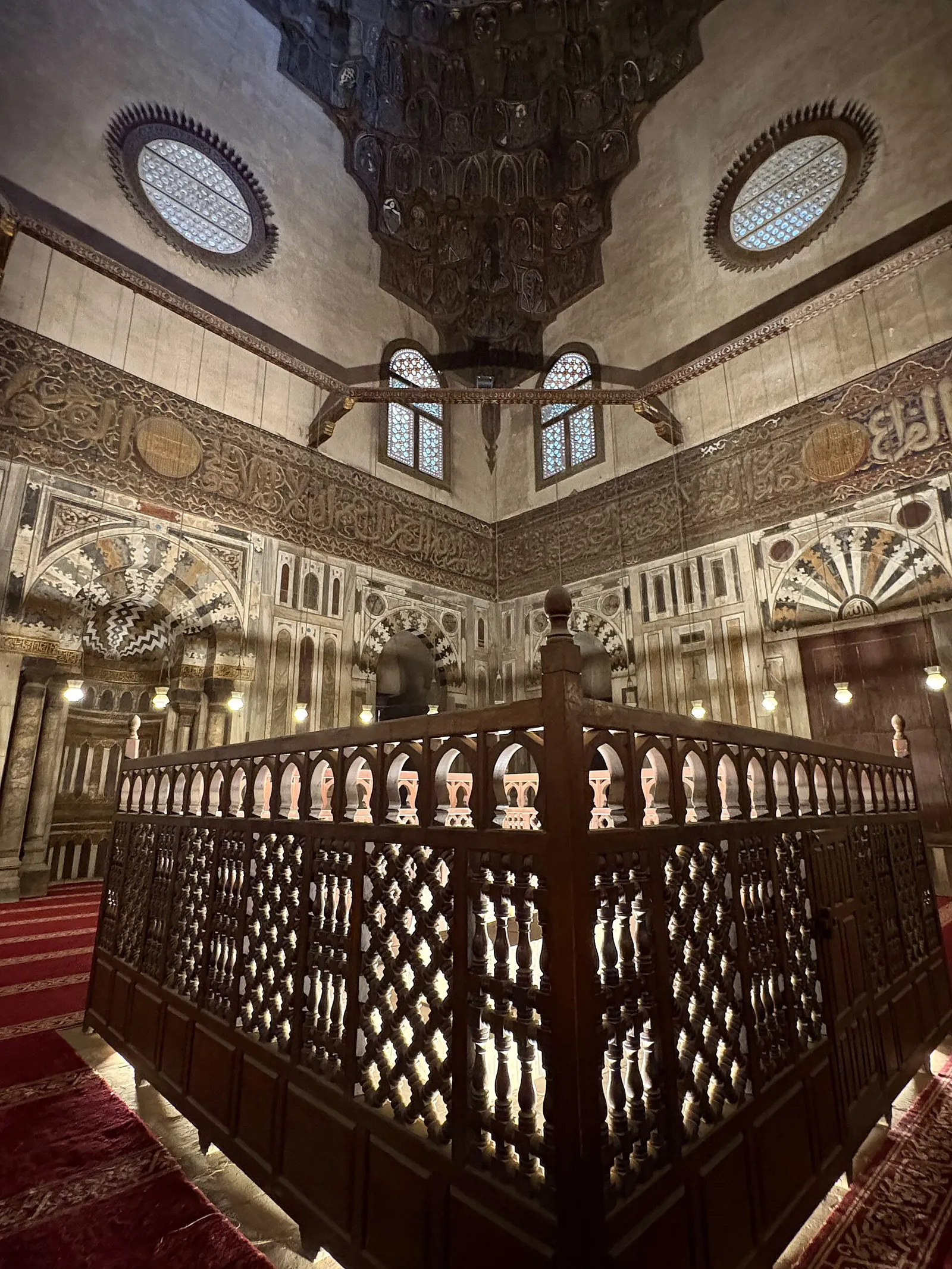
Enter fourteenth-century Cairo through monumental architecture, endowment, craft, water, traffic and sound—while keeping reconstruction distinct from evidence. Narrative is used only where the evidence boundary remains visible.
SCENE 01 / T+1360
Approaching the monument
Scale, street alignment and controlled entry made architecture part of the urban experience before any interior detail became visible.
What survives
Material, text, architecture or environmental trace that can be inspected and cited.
What it may support
A reasoned connection that remains distinct from direct observation.
What is missing
Voices, dates, actions or relationships the current record cannot securely recover.
What changed later
Excavation, conservation, display and modern community shape what can be known now.
Scene protocol
- Name the primary evidence.
- Describe the interpretive step.
- State the uncertainty.
- Remove details added only for atmosphere.
TIME CHECK 1Scale, street alignment and controlled entry made architecture part of the urban experience before any interior detail became visible. Which phrase is evidence, and which phrase is reconstruction?
SCENE 02 / T+1360
Patronage and endowment
Monumental foundations joined political authority, education, worship, employment and property through documented institutional arrangements.
What survives
Material, text, architecture or environmental trace that can be inspected and cited.
What it may support
A reasoned connection that remains distinct from direct observation.
What is missing
Voices, dates, actions or relationships the current record cannot securely recover.
What changed later
Excavation, conservation, display and modern community shape what can be known now.
Scene protocol
- Name the primary evidence.
- Describe the interpretive step.
- State the uncertainty.
- Remove details added only for atmosphere.
TIME CHECK 2Monumental foundations joined political authority, education, worship, employment and property through documented institutional arrangements. Which phrase is evidence, and which phrase is reconstruction?
SCENE 03 / T+1360
Stone, wood and metal
Carvers, builders and makers transformed sourced materials through specialist labour. Ornament is evidence of process, not an escape from function.
What survives
Material, text, architecture or environmental trace that can be inspected and cited.
What it may support
A reasoned connection that remains distinct from direct observation.
What is missing
Voices, dates, actions or relationships the current record cannot securely recover.
What changed later
Excavation, conservation, display and modern community shape what can be known now.
Scene protocol
- Name the primary evidence.
- Describe the interpretive step.
- State the uncertainty.
- Remove details added only for atmosphere.
TIME CHECK 3Carvers, builders and makers transformed sourced materials through specialist labour. Ornament is evidence of process, not an escape from function. Which phrase is evidence, and which phrase is reconstruction?
SCENE 04 / T+1360
Learning and recitation
Courtyards and iwans carried voices, footsteps and teaching. Acoustic imagination should be tied to architecture and documented use.
What survives
Material, text, architecture or environmental trace that can be inspected and cited.
What it may support
A reasoned connection that remains distinct from direct observation.
What is missing
Voices, dates, actions or relationships the current record cannot securely recover.
What changed later
Excavation, conservation, display and modern community shape what can be known now.
Scene protocol
- Name the primary evidence.
- Describe the interpretive step.
- State the uncertainty.
- Remove details added only for atmosphere.
TIME CHECK 4Courtyards and iwans carried voices, footsteps and teaching. Acoustic imagination should be tied to architecture and documented use. Which phrase is evidence, and which phrase is reconstruction?
SCENE 05 / T+1360
Water and the city
Fountains, wells and distribution systems connected piety, public service and infrastructure under demanding environmental conditions.
What survives
Material, text, architecture or environmental trace that can be inspected and cited.
What it may support
A reasoned connection that remains distinct from direct observation.
What is missing
Voices, dates, actions or relationships the current record cannot securely recover.
What changed later
Excavation, conservation, display and modern community shape what can be known now.
Scene protocol
- Name the primary evidence.
- Describe the interpretive step.
- State the uncertainty.
- Remove details added only for atmosphere.
TIME CHECK 5Fountains, wells and distribution systems connected piety, public service and infrastructure under demanding environmental conditions. Which phrase is evidence, and which phrase is reconstruction?
SCENE 06 / T+1360
A living historic district
Later repair, reuse and contemporary worship make the monument more than a frozen Mamluk scene. Visitors enter a continuing place.
What survives
Material, text, architecture or environmental trace that can be inspected and cited.
What it may support
A reasoned connection that remains distinct from direct observation.
What is missing
Voices, dates, actions or relationships the current record cannot securely recover.
What changed later
Excavation, conservation, display and modern community shape what can be known now.
Scene protocol
- Name the primary evidence.
- Describe the interpretive step.
- State the uncertainty.
- Remove details added only for atmosphere.
TIME CHECK 6Later repair, reuse and contemporary worship make the monument more than a frozen Mamluk scene. Visitors enter a continuing place. Which phrase is evidence, and which phrase is reconstruction?
RECONSTRUCTION LOG
Six statements to complete
Approaching the monument
Known: __________ Inferred: __________ Unknown: __________
Patronage and endowment
Known: __________ Inferred: __________ Unknown: __________
Stone, wood and metal
Known: __________ Inferred: __________ Unknown: __________
Learning and recitation
Known: __________ Inferred: __________ Unknown: __________
Water and the city
Known: __________ Inferred: __________ Unknown: __________
A living historic district
Known: __________ Inferred: __________ Unknown: __________
SOURCE RETURN
Evidence trail
- Archaeological report or primary document.
- Institutional object or site record.
- Recent scholarly interpretation.
- Image creator and reuse licence.
Reviewed 16 July 2026. No fictional eyewitness is presented as historical testimony.